


Postpartum Hair Loss: How Mesh Integration Can Help You Feel Like Yourself Again

You made it through pregnancy. You brought a beautiful new life into the world. You're learning how to survive on very little sleep. And then one morning, a few months after your baby arrives, you step out of the shower and see a handful of hair in the drain.
Then it happens again the next day. And the next.
If this is you right now, first take a deep breath. What you're going through is incredibly common, and in most cases, it is temporary. You are not losing all of your hair, and you are not alone.
I'm May Luu, and for over 20 years I've worked exclusively with women who have fine, thinning hair and hair loss. Many of my clients are new moms who came to me feeling like they didn't recognize themselves in the mirror anymore. I want to share what I tell every one of them: what's happening, when it gets better, and what you can do in the meantime to feel like yourself again.
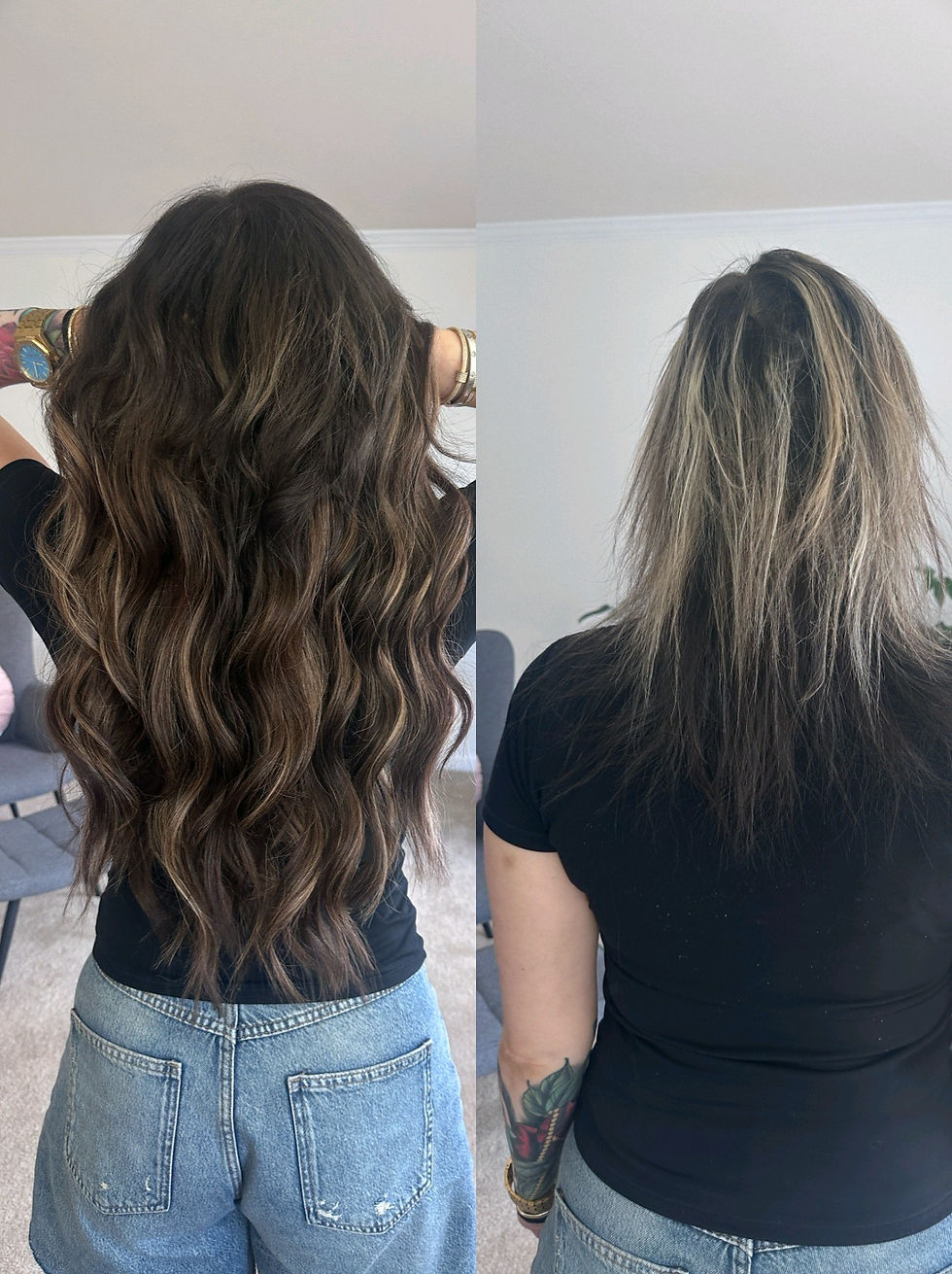
What Is Postpartum Hair Loss?
During pregnancy, higher hormone levels keep more of your hair in its growing phase. That's why so many women notice their hair feels thicker and fuller while they're pregnant. You're simply shedding less than usual.
After your baby is born, your hormones drop back down. All that hair that was held in the growing phase moves into the resting and shedding phase at about the same time. The result can feel sudden and dramatic, even though it's your body's natural way of returning to normal.
For many women, postpartum shedding starts around two to four months after giving birth, and it usually settles down within six months to a year. Everyone's timeline is a little different.
Here's a helpful number to know: it's normal for anyone to lose around 50 to 100 hairs a day. During postpartum shedding, that number can be much higher for a while, which is why it feels so alarming.
Where New Moms Usually Notice It Most
Most of the postpartum clients I see notice thinning around the perimeter of their hair. That usually means the hairline, the temples, and around the face. Some moms also notice their part looks wider or their ponytail feels thinner.
As your hair begins to grow back, you may notice short, fine baby hairs popping up around your hairline. That's a good sign! It means new growth is coming in. It can take time for those new hairs to grow long enough to blend with the rest of your hair, and that in-between stage is often when moms reach out to me.
Your Hair Will Most Likely Grow Back
I want you to hold on to this: for most women, postpartum hair loss is temporary and the hair does grow back.
By the time most postpartum moms sit in my chair, their hair looks thinner and softer than it used to, but there is usually still a good amount of it. The shedding has either stopped or is almost finished. What they need isn't a dramatic transformation. They need a little support while their natural hair catches up.
If your shedding continues past the first year, or your hair isn't growing back the way you expected, please talk with your doctor or dermatologist. Sometimes things like thyroid changes or low iron after pregnancy can play a role, and those are worth checking.
Support Your Hair From the Inside
While you're waiting for your hair to recover, there are simple things that can make a real difference:
Eat enough protein. Hair is made of protein, so your body needs it to rebuild.
Watch your iron. Low iron is common after pregnancy and can slow down regrowth.
Keep taking your vitamins. Many doctors recommend continuing prenatal or postnatal vitamins after birth, especially if you're breastfeeding. The nutrients that supported your baby also support your hair. Check with your doctor about what's right for you.
Be gentle with your hair. Avoid tight ponytails, use less heat, and try a satin pillowcase to reduce breakage.
These small habits add up over time and help give your new hair the best chance to grow in healthy.
When Is the Right Time to Get Extensions or Mesh Integration?
This is one of the most important things I share with new moms.
Wait until your shedding has stopped or is almost completely finished. If your hair is still shedding rapidly, extensions and hair systems will not hold up well, and we risk putting stress on hair that is still recovering. If you're unsure, talk with your dermatologist or doctor, and it's always best to wait until the shedding has completed its full cycle.
The sign I look for is stability. When the heavy shedding has slowed down and your hair feels steady again, your natural hair is ready to hold added hair safely and comfortably.
If you're not sure where you are, that's exactly what a consultation is for. I'll look at your hair honestly and tell you what I see, even if my recommendation is to wait a little longer.
What Solutions Work Best for Postpartum Hair Loss?
Every mom is different, so every plan is customized. Here's what I most often recommend.
A Little Help: Lightweight Extensions
Most postpartum moms don't need a lot of hair. Sometimes it's just one or two rows of thin, lightweight wefts. Other times, it's a few small K-Tips placed around the perimeter where the thinning shows most. This adds fullness and helps blend those short regrowth hairs while your natural hair grows out.
Before we do anything, I show every client the hair and let her feel how soft and lightweight it is. So many moms are surprised by how gentle and natural it feels.
More Coverage: Mesh Integration
For moms with more significant thinning, especially if an area has become very sparse, mesh integration can be life changing.
A soft, breathable mesh, almost like a fine net, is placed on the thinning area and gently secured with small beads. Your natural hair comes through the mesh and blends with the added hair. Because the mesh spreads the weight over a wider area instead of pulling on individual strands, it's incredibly gentle on fragile, recovering hair.
Mesh integration isn't something you take off every day. It stays on and is adjusted every 4 to 5 weeks. For a busy new mom, that can be a huge relief. You wake up with your hair already done, even on the days when there's no time to shower, let alone style.
Feeling Like Yourself Again
I know that hair might seem like a small thing compared to caring for a newborn. But how you feel when you look in the mirror matters. So many moms tell me that getting their fullness back helped them feel like themselves again during a season when everything else felt so new and so different.
You spend so much of your energy caring for your baby. It's okay to do something that helps you feel confident too.
Why Work With a Hair Loss Specialist?
Postpartum hair is delicate. The wrong method, too much weight, or rushing in while you're still shedding can make things harder instead of better. Working with someone who understands hair loss means your plan protects your natural hair while it recovers.
I work with moms from Montgomery County and surrounding areas, including Germantown, Gaithersburg, Damascus, Frederick, and Northern Virginia. Every appointment and every hair loss situation is customized, because no two women's hair is the same.
Ready to Feel Like You Again?
If you're a new mom struggling with postpartum hair loss, I would love to help. Let's look at where your hair is right now, talk about your timeline, and find a gentle option that fits your hair and your busy life.

Book your free consultation at www.mayidoyourhair.net. As a hair loss and hair extension specialist in Clarksburg Maryland, I'm here to help you feel beautiful and confident in this new chapter.


Comments