


Thin Hair on the Sides? Partial Mesh Integration Might Be the Answer


If you've ever wanted fuller, thicker hair extensions but worried your hair on the sides is too fine or thin to hold them securely, you're not alone. This is one of the most common concerns we hear at May I Do Your Hair, and it has a real, healthy solution: partial mesh integration.
Partial mesh integration is a custom technique that adds extra support exactly where your natural hair needs it most, often on the sides near the temples, or across the front hairline for extra bang support, so your extensions stay secure without pulling on or damaging fine, fragile strands.
If you're in Clarksburg, Gaithersburg, Frederick, or anywhere in Montgomery County or Northern Virginia and you've been told "your hair is too thin for extensions," this post is for you.

What Is Partial Mesh Integration?
Partial mesh integration is exactly what it sounds like. A small, breathable mesh panel is custom placed in a specific area of the head, usually the sides or the front hairline, to reinforce weak spots before extensions or wefts are attached.
As you can see in the photo above, the mesh is placed right along the natural part line, giving thinning strands something sturdier to anchor to instead of bearing all the tension themselves. Your natural hair is integrated through the mesh, so the weight of the extension is supported evenly rather than pulling directly on hair that's already fine or fragile.
Think of it as building a stronger foundation before adding the finishing layer.
Why Thin Sides Struggle to Hold Extensions (and How Partial Mesh Integration Helps)
Many women naturally have finer, more fragile hair along the hairline and temples than they do throughout the rest of their head. Add in things like:
Postpartum shedding
Hormonal changes
Traction from ponytails or tight styles over the years
Natural aging and thinning
and the sides often become the weakest point on the head. That's exactly where traditional wefts or K-tip extensions tend to slip, pull, or cause additional breakage, which only feeds the fear that got you here in the first place: "Will extensions make my thinning worse?"
How Partial Mesh Integration Solves This
This is where partial mesh integration is a game changer. Instead of skipping extensions altogether or risking more damage, this method allows you to:
Get Full, Natural Looking Results Without Overloading Fragile Hair
The mesh distributes weight and tension more evenly, so your natural hair isn't doing all the work.
Protect Hair That's Already Thinning
Because the extension is anchored to the mesh rather than gripping directly onto sparse strands, there's significantly less pulling and friction on the hair itself.
Target Only the Areas That Need It
This isn't a full head of mesh. It's strategically placed only where you need reinforcement, whether that's the sides, for extensions that actually stay put without slipping, or the front hairline, for beautiful, full looking bangs that have proper support.
Maintain a Healthy Hair Journey
Because it's designed to protect rather than strain the hair, partial mesh integration fits our top priority at May I Do Your Hair: healthy hair first, always.
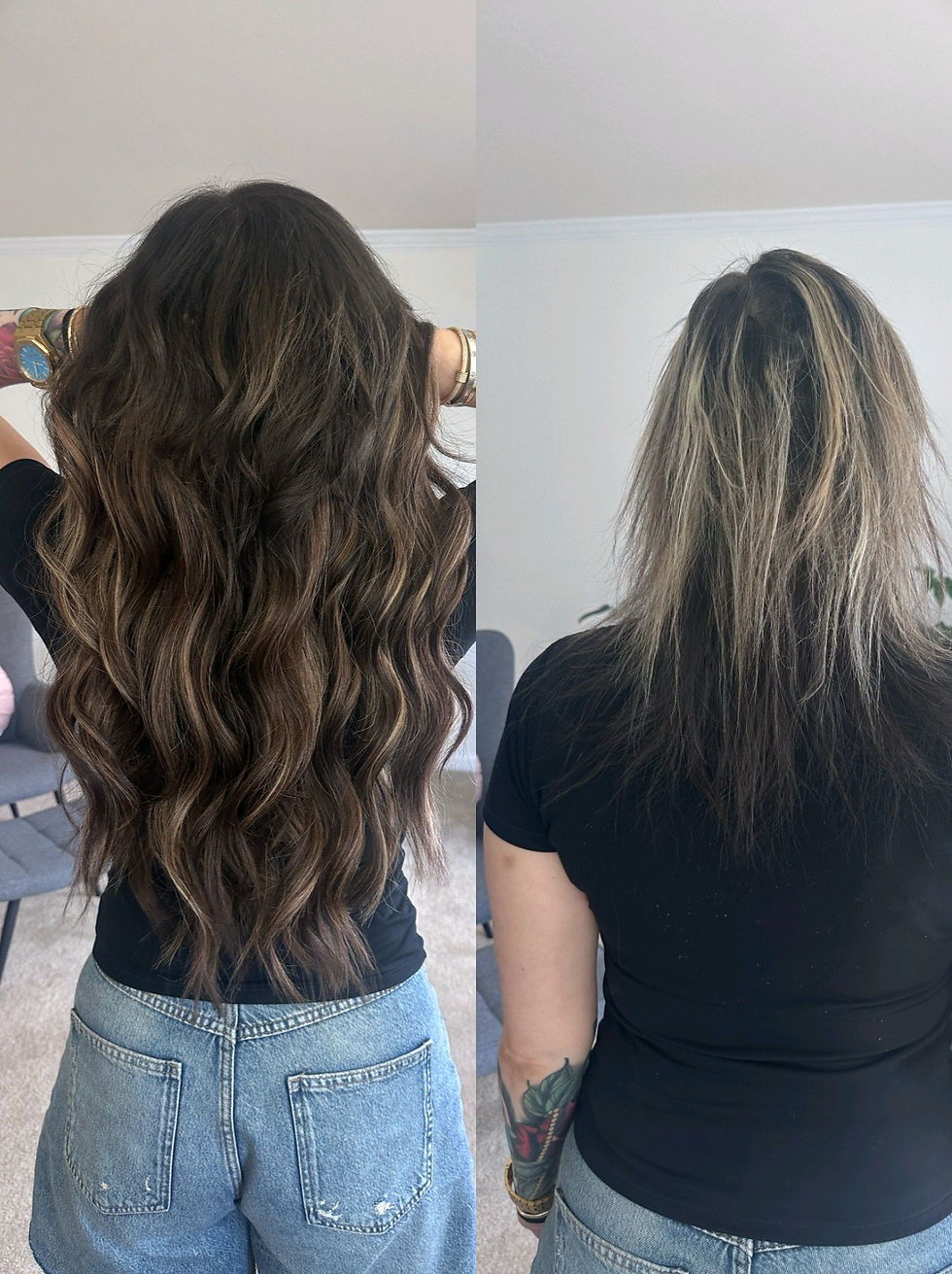
See the difference for yourself. These photos show real clients whose thin, flat hair on the sides and crown made traditional extensions feel out of reach, until partial mesh integration gave their hair the support it needed to hold full, natural, waist skimming length.
Who Is a Good Candidate for Partial Mesh Integration?
This method is ideal if you:
Have fine or thinning hair on the sides or hairline
Have been told your hair "won't hold" traditional extensions
Are nervous about extensions causing more damage or thinning
Want fuller looking hair or bangs without compromising your natural hair's health
Want a low maintenance option that fits your lifestyle
If any of this sounds like you, a consultation is the best next step so we can look at your hair in person and map out exactly where extra support would help most.
What to Expect at Your Consultation
Every partial mesh integration is fully custom. At your consultation, we'll:
Assess your natural hair density, especially at the sides and hairline
Talk through your hair goals, more fullness, longer length, better bang coverage, or all of the above
Determine the best placement and amount of support your hair actually needs, never more than necessary
Walk you through the process, timeline, and maintenance so you know exactly what to expect
There's no guessing and no one size fits all approach, just a calm, thoughtful plan built around your hair.
Frequently Asked Questions
Does mesh integration damage my natural hair?
When placed and maintained properly, mesh integration is designed to protect fragile hair, not damage it. It reduces the direct tension your natural strands would otherwise carry.
Is this only for the sides of my head?
No, while it's especially helpful for thin sides, partial mesh integration can also be placed at the front hairline to support fuller looking bangs.
How is this different from a full mesh integration system?
Partial mesh integration only reinforces specific areas that need extra support, rather than covering the entire head. It's a more targeted, minimal approach for those who just need help in one or two spots.
How long does partial mesh integration last?
Longevity depends on your hair's growth cycle and how well it's maintained, which we'll go over in detail during your consultation and follow up appointments.
Will it look natural?
Yes. The goal of this technique is completely natural looking, seamless results, nothing bulky, nothing obvious.
Ready to Get Fuller Hair Without the Fear?
You shouldn't have to choose between the hair you want and the health of the hair you have. Partial mesh integration was designed for exactly this, giving you natural, beautiful fullness while protecting and supporting the hair underneath.


Comments